TECHNIQUE BEFORE STRENGTH
Grappling / BJJ No-Gi
Wrestling without a kimono: positions, control, and submissions on the tatami.
Inside the training
WHAT WE DO.
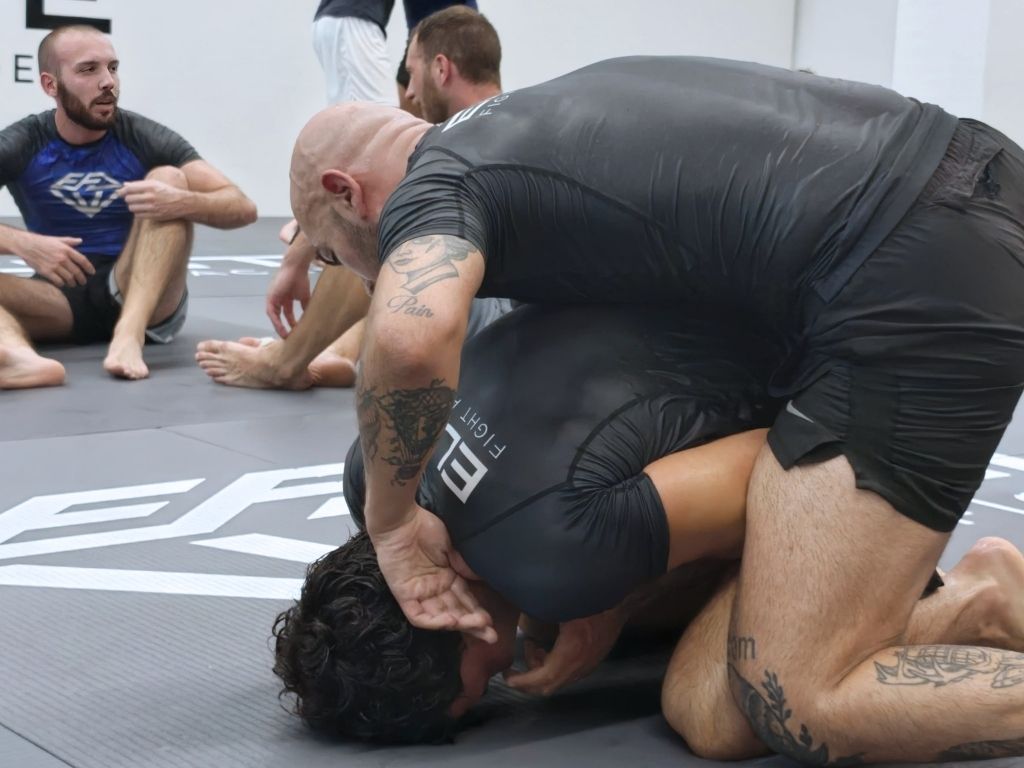
Grappling and BJJ No-Gi focus on wrestling without a kimono, with no strikes. You'll study positions, control, escapes, and submissions, learning to use leverage, balance, and strategy rather than relying solely on strength.
- Positions, guard passes, and control
- Escapes, defence, and submission principles
- Technical exercises and guided sparring on the tatami
For those who want to learn wrestling without a kimono and develop technique on the tatami.
Jiu-Jitsu techniques: positions, grips and submissions
In the Grappling / BJJ No-Gi course you learn to move on the ground, control positions and recognise grips and submissions, working with a partner under the guidance of our instructors. This infographic helps you match the Italian and English names to the techniques you meet on the mat. Use it as a reference to revise: it does not replace guided practice with the coach.
Positions
Closed guardGuardia chiusa
The person underneath wraps their legs around their partner’s body. It’s a position for learning to control distance, defend and look for a sweep.
Half guardMezza guardia
The person underneath traps just one of their partner’s legs between their own. You study balance and protection to recover guard or change position.
Seated guardGuardia seduta
The person underneath stays seated facing their partner, who is often standing. Hands and legs help manage distance and create connections for the fight.
Knee on bellyGinocchio sullo stomaco
The person on top controls their partner’s torso with one knee, keeping mobility. In training the weight is managed carefully, without sudden pressure.
Side controlControllo laterale
The person on top lies across their partner on the ground. The work is about stability and control; the person underneath learns to create space and recover a better position.
MountMonta
The person on top sits astride their partner’s torso. It’s an important control position: you learn the balance to keep it and the defences to escape it.
Back controlSchiena
Control happens from behind the partner, with the body close to their back. You study how to maintain control without losing balance and how to defend the neck and the position.
TurtleTartaruga
The body curls up on knees and forearms, protecting the inside space. It can be a transition phase, but it requires attention because the back can become accessible.
Grips
C gripPresa a C
The hand forms a C around the body part to control. It’s used to orient a limb or manage distance, without relying only on finger strength.
Scoop gripPresa a cucchiaio
The hand supports a body part from below, like a small scoop. It helps gather and control a limb while looking for a stable connection.
S gripPresa a S
The bent fingers of both hands hook together, forming an S-shaped connection. It’s one of the grips used to join the hands and maintain control.
Seat beltCintura di sicurezza
One arm goes over a shoulder and the other under the armpit, with the hands linked in front of the torso. It’s a typical back control, not a submission in itself.
Gable gripPresa Gable
The hands join palm to palm without interlacing the fingers. The grip, associated with wrestler Dan Gable, creates a compact connection for several controls.
Butterfly gripPresa a farfalla
In this guide, this name indicates a variant of hand connection. Terminology can vary between schools: the coach shows the reference used in class; it should not be confused with butterfly guard.
Submissions
Toe holdLeva sul piede in torsione
A submission acting on the foot and ankle joint through a twist. Despite its English name, it does not involve only the toes, and it should be studied exclusively with the coach.
Knee barLeva al ginocchio
A lock affecting the knee joint through extension of the leg. It requires great control: the availability of the technique and how it is practised depend on level and rules.
Ankle lockLeva al piede
In this guide it indicates the ankle lock, commonly studied in its straight form. The control involves the foot and ankle and is approached gradually, with attention to safety.
OmoplataOmoplata — leva alla spalla con le gambe
A shoulder submission in which the legs contribute to controlling the arm. The position can also offer opportunities for a sweep, without necessarily reaching a tap.
ArmbarLeva al braccio
A lock affecting the elbow, through control of the arm. For beginners, what counts is recognising the position, protecting the joint and stopping immediately at the partner’s signal.
AmericanaAmericana — leva alla spalla
A shoulder lock with the arm bent. It’s often met from top positions: in class you study control and recognition of the technique, without sudden movements.
Heel hookLeva al tallone
A twisting submission that can involve the knee as well as the ankle. It is particularly delicate and not suitable for independent experimenting; its use depends on experience and rules.
KimuraKimura — leva alla spalla
A shoulder lock with the arm bent, different from the Americana in the direction of control. The Kimura grip can also be used to control and change position.
Triangle chokeTriangolo di gambe
A submission in which the legs surround the neck and one arm of the partner. You mainly study recognising the position and controlled practice, with immediate release at the tap.
Anaconda chokeAnaconda — strangolamento braccio-collo
A choke that includes the neck and one arm in its control. It belongs to the family of arm-neck submissions and is distinguished from the D’Arce by the path of the controlling arm.
D’Arce chokeD’Arce — strangolamento braccio-collo
A choke that involves the neck and one arm of the partner. The name comes from grappler Joe D’Arce; the coach helps distinguish it from the Anaconda without confusing the controls.
Arm triangleTriangolo di braccia
A choke in which the arms control the neck and one arm of the partner. It’s often connected to top positions and requires attention to the tap signal.
Rear naked chokeMataleao — strangolamento da dietro
A neck submission performed from back control, without using the gi. “Mata-leão” is the Portuguese name: training favours control and immediate release at the tap.
Guillotine chokeGhigliottina
A choke that controls the neck from the front. There are several variants: in the course you learn to recognise them and practise them only in a guided and controlled way.
Submissions are practised only under the supervision of our instructors and according to level and rules. At the tap — the signal of submission, by hand or voice — stop and release immediately; do not wait for pain to signal it.
Gallery
COURSE PHOTOS.
The people on your path
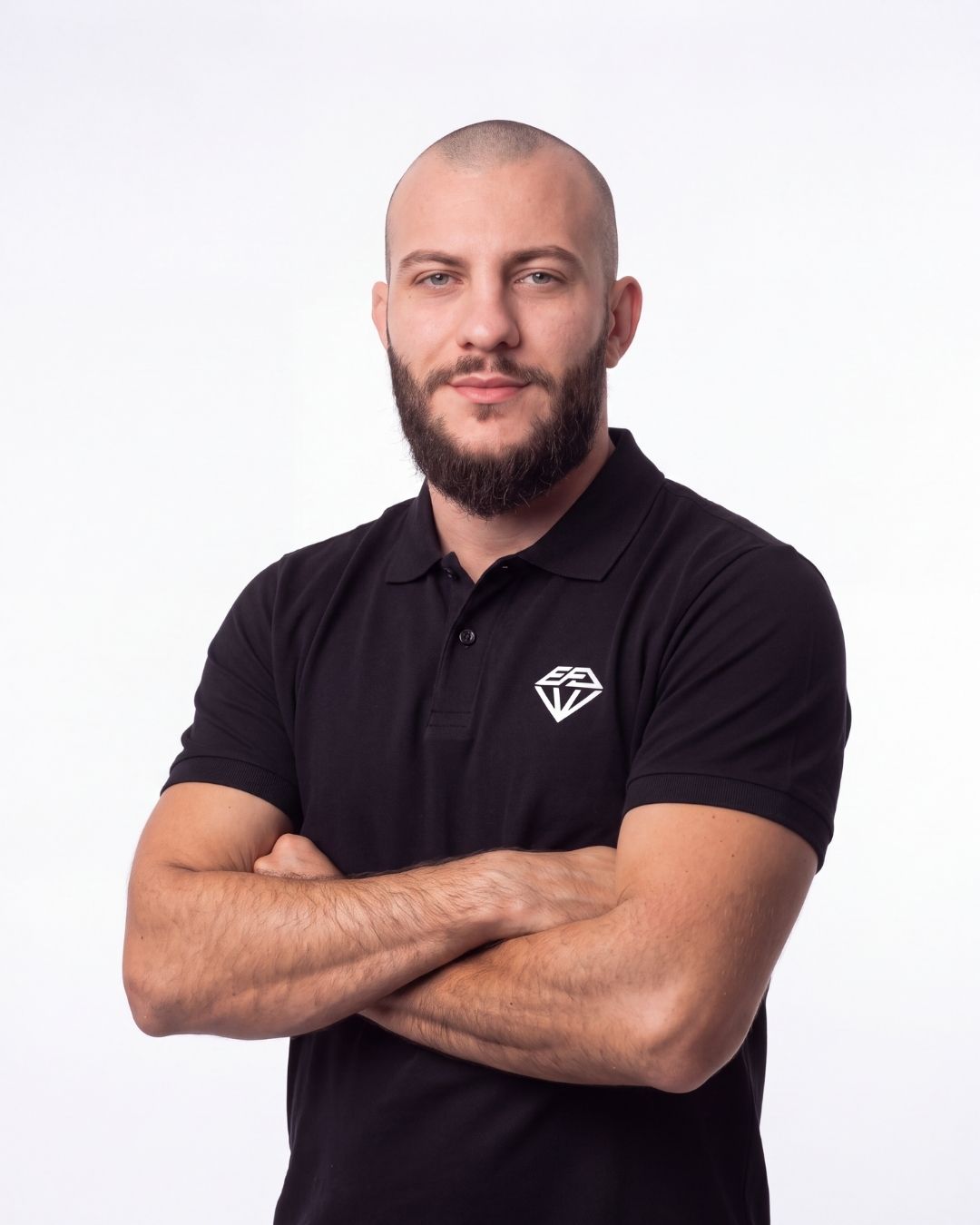
YOUR INSTRUCTORS.
Arrange your training
COURSE SCHEDULE.
Grappling / BJJ No-Gi
- Monday
- –
- Tuesday
- –
- Wednesday
- –
- Thursday
- –
- Friday
- –
First workout · free
YOUR FIRST TRIAL.
Book your first free trial workout for Grappling / BJJ No-Gi. Let's chat on WhatsApp and arrange the lesson together.
Prenota la prova gratuitaBring sports gear and a towel. Gloves, shin guards, and other protective gear are lent by us at the start.